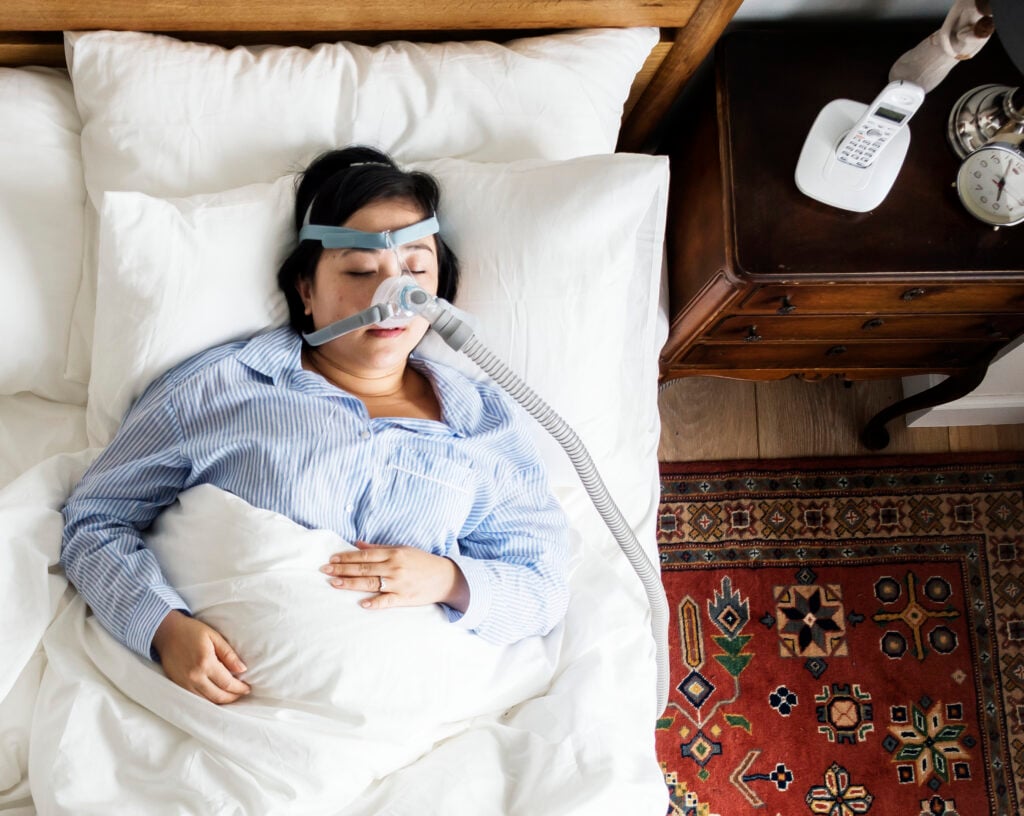
Starting CPAP can feel like a big step. You’ve got a new machine, a mask, a hose, and a lot of questions. Take a breath. Thousands of people begin therapy every week, and the ones who succeed aren’t the ones who had a perfect first night. They’re the ones who knew what to expect and gave themselves a little time to adjust. This guide gets you there.
CPAP stands for continuous positive airway pressure. In plain terms, your machine sends a gentle, steady stream of air through a hose and mask that keeps your airway from collapsing while you sleep. That’s what stops the snoring, the gasping, and the constant waking that come with sleep apnea. It isn’t oxygen and it isn’t breathing for you. It’s just steady air holding the door open so you can breathe on your own, all night.
Once therapy is working, most people notice they wake up clearer, snore less, and stop dragging through the afternoon. That payoff is the reason it’s worth pushing through the first-week learning curve.
Getting started is simpler than it looks. A basic setup has three parts: the machine on your nightstand, the hose, and the mask. Most machines also have a small water chamber, the humidifier, that warms and moistens the air so it doesn’t dry out your nose and throat.
Fill the humidifier with distilled water, not tap water, since tap water leaves mineral buildup over time. Connect the hose to the machine and to your mask. Plug it in, and you’re ready. Many newer machines walk you through setup with a companion phone app that shows step-by-step videos and even helps you check your mask fit.
Your doctor has already set the pressure for you based on your sleep study, so you don’t need to adjust that yourself.
Here’s the honest truth: the first few nights can feel strange. Sleeping with air blowing into a mask is new, and your body needs a little time to accept it. That’s normal. It doesn’t mean therapy isn’t for you.
A trick that helps a lot of people: wear the mask for short stretches while you’re awake and relaxed, watching TV or reading, before you ever try to sleep in it. Do that for a few evenings so the mask starts to feel ordinary. Then turn the machine on while you’re awake and get used to the airflow. Only after that does it go to bed with you.
If the airflow feels like too much at first, look for the “ramp” setting. It starts you at a low, gentle pressure and slowly builds up to your prescribed level after you’ve drifted off. Many machines also have a comfort feature that eases the pressure slightly each time you breathe out, so you’re not fighting the air.
Almost every early hiccup has an easy solution, so don’t quietly give up if something bugs you.
If something still feels off after you’ve tried the basics, call your provider. Settings can be reviewed and masks can be swapped. The fix is usually small.
Consistency is what makes CPAP work. Aim to wear it every night for the whole night, even for naps. The more you use it, the faster it becomes just another part of your bedtime routine, like brushing your teeth. Many machines track your usage and therapy quality, which can be surprisingly motivating once you see the numbers improving.
Give yourself a couple of weeks of patience and small adjustments. Most people go from “I’m not sure about this” to “I don’t want to sleep without it” faster than they expect. You’ve got everything you need to start. The rest is just showing up, one night at a time.